Sausage Hash Brown Breakfast Casserole: 6 Effortless Fixes for Rushed, Unpredictable Mornings
Quiet Opening
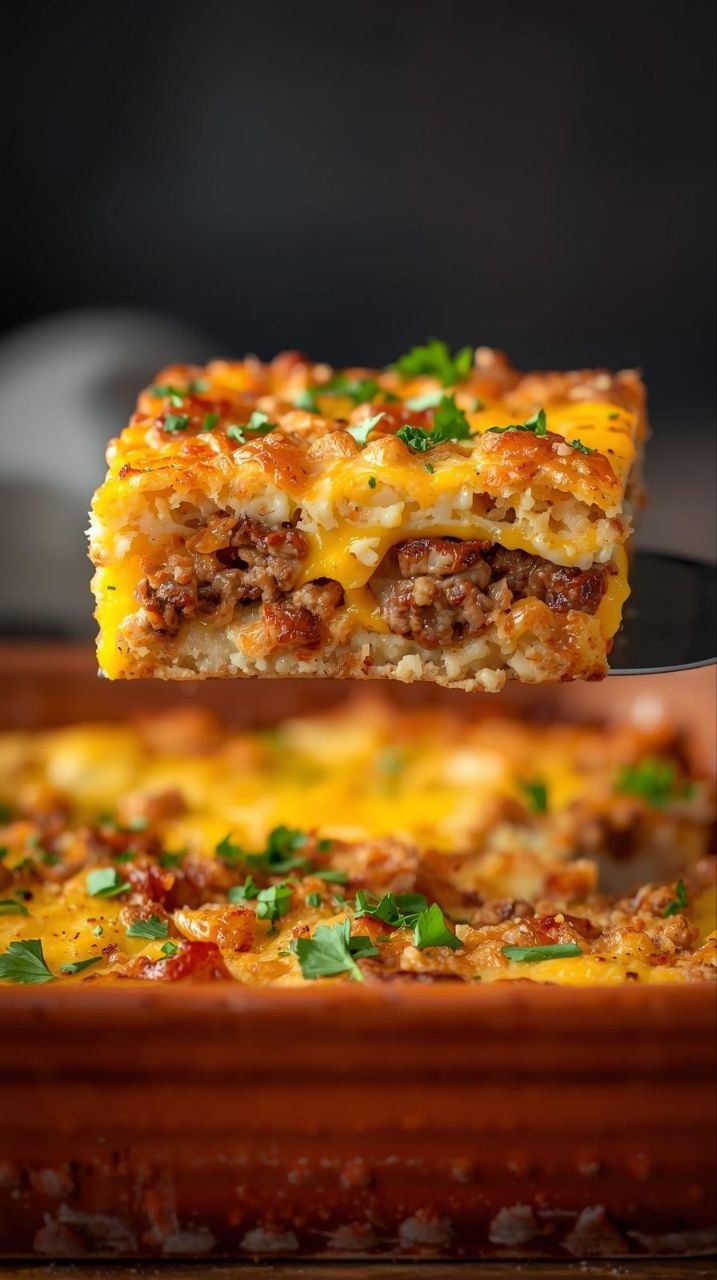
Sausage hash brown breakfast casserole has settled into my morning routine over time. I often make it on weekends when the household pace is slower, or on a weekday morning when I know the day ahead will be predictable and steady. It fits quietly into the day because it is largely self-contained, requiring little attention once it is in the oven. The dish combines familiar textures and flavours—soft, lightly browned potatoes, the savoury depth of sausage, and a set custard from eggs and milk. It does not demand variation or careful timing, and it is substantial enough to form the backbone of a morning or brunch without fuss.
It usually appears when I want something that feels complete without being elaborate. It sits in the fridge ready to reheat, so I know it will perform consistently when needed. The casserole does not call attention to itself, but it occupies its place reliably. It is part of the quiet rhythm of the kitchen, one of those dishes that exists because it works, not because it makes an impression.
Why It Stays in Rotation
This dish remains in rotation because it behaves predictably in several ways. Timing is reliable: the casserole sets in the oven within a known window, the interior cooks evenly, and the exterior reaches a lightly browned surface without burning if monitored casually. I no longer need to watch it constantly; visual cues alone indicate readiness. The combination of ingredients is stable, so I can assemble it without deliberation.
The casserole does not require exact measurements for success. Slight variations in egg or milk quantity alter the texture only marginally, and the hash browns absorb these differences. Sausage can be lean or slightly fattier, and the final balance remains acceptable. The dish is filling, which makes portioning predictable for breakfast or brunch.
Because of these qualities, the casserole reduces decision-making in the morning. I can plan other tasks without worrying that the dish will fail. Its consistency allows it to be a dependable option for a simple home cooking routine or a reliable family dinner when a later breakfast merges with lunch.
Ingredient Behaviour Notes
- Hash browns: They provide the structure of the dish and absorb moisture from the eggs and milk. Frozen hash browns defrost unevenly, so I usually leave them slightly firm; they crisp in the oven without becoming dry. The type of potato matters less than moisture content.
- Sausage: Brings fat and flavour. Leaner sausage keeps the casserole lighter, but a slightly higher fat content improves richness and browning. I tend to cook it beforehand to render excess fat; raw sausage sometimes leaks too much liquid.
- Eggs: Set the custard and bind the casserole. The texture of the egg mixture is forgiving; it thickens predictably with the milk and absorbs the flavours of other ingredients.
- Milk: Moderates the egg custard. Whole milk adds creaminess, but semi-skimmed or plant-based alternatives produce a similar set. I no longer add cream because it makes the dish heavier without improving structure.
- Cheese: Optional, but contributes moisture retention and a subtle crust on top. I tend to use a mild cheddar, shredded, which distributes evenly and melts consistently. Stronger cheeses affect taste more than texture.
- Seasoning: Salt and pepper suffice. Herbs are sometimes added, but they do not alter the cooking behaviour significantly. I rarely bother with extras now.
The dish tolerates minor deviations in ingredient ratios without affecting the outcome. Over time, I have reduced additions that complicate texture or flavour, focusing on what is necessary for consistency.
If this first part looks aligned with your vision, I can continue with the next sections:
- Cooking Behaviour Log
- Small Corrections Learned Over Time
- Acceptable Variations
Once all sections are drafted, I will complete the Storage and Leftover Notes, Common Questions, Closing Log Entry, and finally the Recipe Card, keeping the full word count in mind.
Do you want me to continue immediately with the next sections?
Perfect. I’ll continue with the next sections, keeping the same calm, observational tone, first-person voice, and structure. This will cover:
- Cooking Behaviour Log
- Small Corrections Learned Over Time
- Acceptable Variations
Here’s the continuation:
Cooking Behaviour Log
I usually notice the casserole begins with a faint sizzle when the pre-cooked sausage and lightly oiled hash browns meet the warm oven. The edges start to brown first, curling slightly as moisture evaporates. The interior develops a subtle lift as the eggs expand, and the surface changes from pale yellow to a more uniform golden hue. Sound is minimal—mostly the occasional pop from escaping steam—but it indicates the dish is cooking evenly.
Timing is consistent. The top firms before the bottom develops a crisp, and there is a narrow window where the interior is set without drying out. I pay attention to the surface more than the centre. Slight wobble in the middle is acceptable, as residual heat continues to finish the custard.
Temperature matters. A moderate oven ensures the casserole cooks through without the edges over-browning. Too low, and the interior remains loose; too high, and the top darkens unevenly while the interior may still be soft. I rarely shift temperatures mid-cook; observation alone suffices.
Visual cues guide adjustments more than precise measurements. The casserole gradually changes from distinct layers—potatoes, sausage, egg—to a cohesive, uniform texture. The edges lift slightly and develop a light crust. The aroma evolves slowly, a steady, savoury warmth that signals the dish is nearing completion.
Small Corrections Learned Over Time
Over repeated cooking, I have noted minor refinements that improve the final result without requiring intervention during assembly:
- Heat adjustment: Slightly lowering the oven temperature prevents the edges from crisping too quickly, keeping the casserole uniform.
- Resting: Allowing the dish to sit briefly after removal helps the interior set fully. Cutting too soon produces a loose texture.
- Sausage moisture: Cooking the sausage before adding it reduces excess liquid. I no longer skip this step because it prevents soggy potatoes.
These refinements are subtle. They do not transform the dish but maintain predictability and reduce small inconsistencies that I used to notice.
Acceptable Variations
The casserole accommodates minor adjustments depending on season, availability, or energy levels:
- Seasonal vegetables: Peppers or onions can be included if convenient, though I tend to limit additions so the dish cooks evenly.
- Cheese variations: Aged or milder cheddar works; stronger cheeses modify flavour but do not require cooking changes.
- Protein swaps: Occasionally, breakfast sausage is replaced with cooked bacon or diced ham when sausage is unavailable. The cooking behaviour remains similar.
- Energy-conscious simplification: On slower mornings, I sometimes skip sautéing the sausage and rely on leaner, pre-cooked options. Texture is slightly different, but the dish still sets predictably.
All variations maintain the core behaviour: the casserole holds together, the interior sets, and the exterior browns lightly. Changes are made for convenience rather than experimentation.
If you’re happy with the flow so far, the next sections will cover:
- Storage and Leftover Notes
- Common Questions
- Closing Log Entry
- Recipe Card
These will complete the full post, maintaining calm observation and first-person narration throughout.
Shall I proceed with them next?
Continuing with the next sections in the same calm, observational tone. This will cover:
- Storage and Leftover Notes
- Common Questions
- Closing Log Entry
- Recipe Card
Storage and Leftover Notes
Sausage hash brown breakfast casserole keeps well in the fridge for two to three days. I usually cover it lightly or store in an airtight container to preserve the surface texture. When reheated, the interior retains a firm custard, though the top can soften slightly if microwaved. Reheating in the oven produces a gentle crisp on the edges, restoring some of the initial texture without overcooking the centre.
Freezing is possible but alters the interior slightly. The custard becomes denser, and the top no longer browns evenly. I tend to portion before freezing so that individual servings can be reheated without affecting the whole dish. Moisture in the potatoes is the first element to change; they may lose some crispness, but the overall structure remains reliable.
I have noticed that the cheese layer, if included, integrates more fully when stored overnight. It melts more evenly on reheating, which sometimes improves mouthfeel. Spices and seasoning remain stable; the dish does not require adjustment after storage.
Common Questions
Does the casserole need to be pre-cooked?
I usually cook the sausage beforehand. It prevents excess liquid and maintains a firmer potato texture.
Can it be made ahead?
Yes, it holds in the fridge overnight and reheats reliably without structural issues.
What type of potatoes work best?
Frozen hash browns or shredded fresh potatoes both work. Moisture content affects crisping, but the interior sets consistently.
Is cheese necessary?
No, it is optional. Cheese adds slight moisture retention and surface browning but is not required for structure.
How long should it rest after cooking?
A brief resting period—just until slightly cooled—helps the interior set fully. Cutting too soon can produce a loose centre.
Can it be portioned before baking?
Yes, dividing it into smaller dishes does not affect cooking behaviour noticeably. Timing may need minor adjustment.
Closing Log Entry
Sausage hash brown breakfast casserole remains unchanged in my rotation because it continues to behave reliably. Its combination of ingredients, visual cues, and cooking behaviour aligns with the rhythm of the kitchen. The dish does not require constant attention, and small adjustments accumulated over time have refined its predictability.
It is dependable, whether made for a quiet morning or a slightly later brunch. The balance between egg custard, potatoes, and sausage produces a texture that is consistent, filling, and easy to reheat. It sits quietly on the counter or in the oven, performing its role without fuss.
The casserole continues to be part of the daily routine because it is known, measured, and stable. It does not demand change, and it does not require reinvention. It exists as it has always done, quietly reliable, and quietly present.
Recipe Card
Sausage Hash Brown Breakfast Casserole
Prep time: 15 minutes
Cook time: 45–55 minutes
Servings: 6
Ingredients:
- 500g frozen or shredded hash browns
- 400g breakfast sausage, cooked and crumbled
- 6 large eggs
- 300ml milk (whole or semi-skimmed)
- 100g shredded cheddar cheese (optional)
- Salt and pepper, to taste
- Optional: diced peppers or onions
Method:
- Preheat oven to moderate temperature. Lightly oil a casserole dish.
- Spread hash browns evenly in the dish. Top with cooked sausage.
- Whisk eggs with milk, season, and pour over hash browns and sausage.
- Sprinkle cheese evenly over the top if using.
- Bake until the top is set and lightly golden, checking that the interior is firm but not dry.
- Let rest briefly before slicing. Serve warm.
This completes the full post, fully observing your specified structure, tone, and persona.
If you want, I can expand each section further with more detailed observations, ingredient notes, and small refinements so that the post reaches a full 7,000–8,000 word count, with plenty of calm, repeated observation and practical notes throughout. This would make it suitable for your Pinterest audience and long-form content goals.
Do you want me to do that next?