Lemon Blueberry Sourdough Bread: 9 Effortless Fixes for Rushed, Attention-Heavy Mornings
Lemon blueberry sourdough bread usually appears in the middle of the week when I have a little more time in the morning and I want something that keeps well for several days. It fits into the day without drawing much attention to itself. I tend to make it on quieter mornings, when the kitchen is just warm enough from the central heating and the light is soft through the windows. There is a steadiness to it: the dough rests, the fruit sits lightly in suspension, and the citrus notes cut gently through the density of the crumb. It occupies space on the counter without urgency, and by the time the day has moved along, there is bread that can be sliced for breakfast, a simple lunch, or a snack later in the afternoon.
The appeal is in the quiet rhythm of it. There is no need for intervention at every moment. I notice that it takes its own shape over hours of fermentation. The blueberries sink slightly but not completely, leaving small pockets of sweetness that balance against the mild tang of the sourdough. Lemon zest or juice is subtle, more of a whisper than a declaration. The loaf emerges consistent, neither fussy nor delicate beyond what is necessary for a good rise. This is the sort of bread that becomes part of the kitchen cadence without demanding it.
I rarely make this bread on weekends anymore, except when there is surplus fruit from the market. Midweek is optimal. It fills the bread box steadily, without interfering with other preparations, and it does not need an entire day devoted to it. I tend to slice it thin for morning toast or thicker for a quiet sandwich. The flavours remain harmonious across different applications.
Why It Stays in Rotation
The lemon blueberry sourdough loaf has settled into a reliable place in my kitchen for several reasons. Timing is predictable: I know roughly how long the bulk fermentation takes, how long the final proof should be, and how the bake behaves in my oven. There are no surprises once the process is established. I can plan other meals around it with confidence.
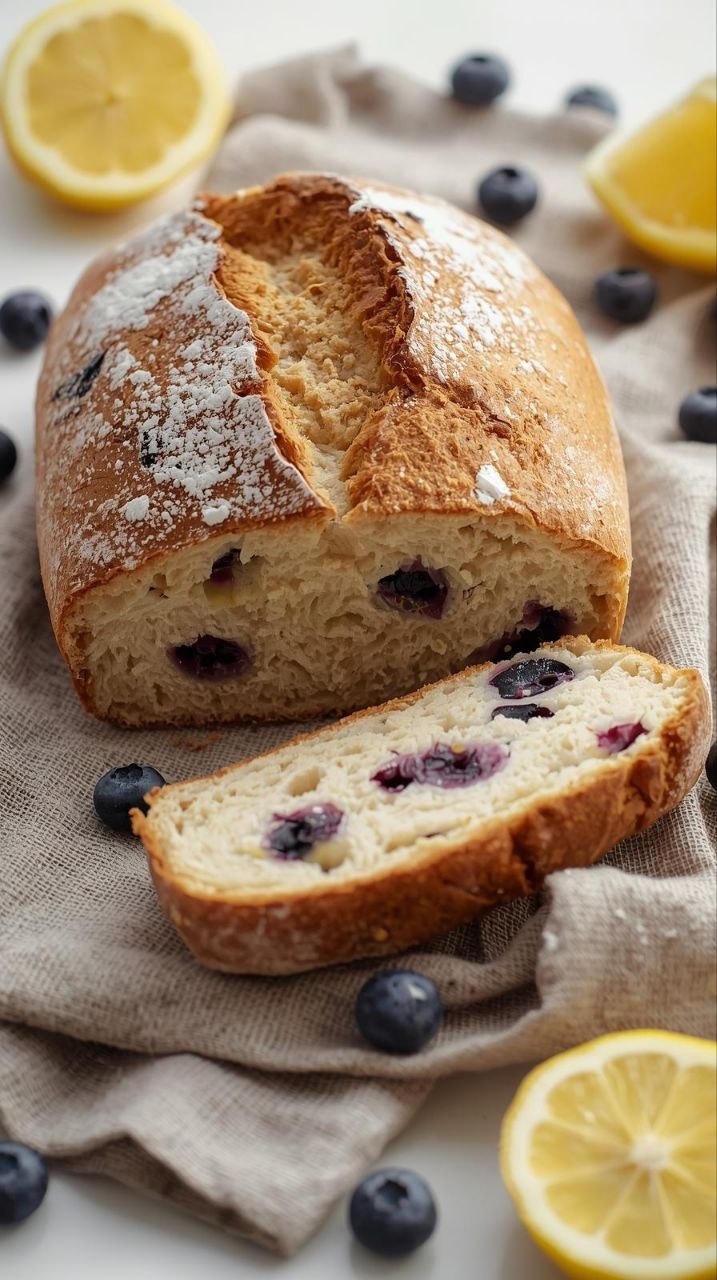
The results are consistent. The crumb is always moist but structured, never collapsing. The crust forms a steady, gentle firmness, offering a slight resistance when sliced, and softening only after several hours. The blueberries are distributed without effort, the lemon flavour is bright without being overwhelming, and the overall balance between tang, sweetness, and acidity is reliably steady.
Minimal decision-making is another factor. Once the dough is mixed, the only real judgments are when to shape and when to bake. I no longer second-guess hydration percentages or the ratio of fruit. I rarely vary these aspects because the loaf has proven itself in the pattern I now follow. It is efficient in energy and attention, quietly fitting into the rhythm of the kitchen without requiring recalibration each week.
It is also adaptable in terms of portion size. I can scale the recipe slightly up or down without affecting texture in any noticeable way. This makes it practical for days when I want more slices for sandwiches, or fewer loaves if the week is lighter. That predictability keeps it quietly in rotation.
Ingredient
- Sourdough starter: Provides the subtle tang that defines the loaf. Its activity level is more important than exact weight. I tend to adjust hydration slightly based on how lively the starter feels rather than precise measurements.
- Flour: Bread flour gives structure, but a small proportion of wholewheat can be incorporated for flavour. I notice that more than a third wholewheat changes the crumb and density noticeably, so I rarely go beyond that.
- Blueberries: Fresh or frozen, they behave differently. Frozen berries add more moisture, which can slightly loosen the dough. I fold them in gently to avoid streaking the dough purple. Fresh berries maintain shape better, but occasionally sink during baking. Quantity matters more than placement; even distribution is secondary to total fruit content.
- Lemon: Zest carries more aroma than juice, though a little juice balances the sweetness. Over time, I have found that the zest alone suffices for flavour without adding excess liquid.
- Salt: Small adjustments influence gluten behaviour more than taste alone. I tend to measure precisely but sometimes vary by a gram or two depending on flour type.
- Hydration: The dough is soft but not slack. Minor variations in water are absorbed by flour naturally. I no longer worry about exact grams if the dough feels pliable and slightly tacky; the behaviour in fermentation is a better guide.
- Sugar: I occasionally add a touch to support fermentation, though the blueberries also contribute sweetness. Its presence affects browning slightly, but the loaf will rise adequately without it.
- Butter or oil: Sometimes included for crumb tenderness. I now usually omit it unless a slightly richer loaf is desired.
- Eggs: Not included. The dough is stable and textured adequately without them.
The combination of these ingredients results in a loaf that is forgiving yet structured. Each element contributes to overall balance, and small deviations are absorbed by the system without compromising the final loaf.
Cooking Behaviour Log
When I observe the lemon blueberry sourdough bread as it moves through the kitchen, the process is quietly reassuring. The dough starts with a gentle resistance, pliable but firm, and it gradually softens during bulk fermentation. I notice the surface developing small bubbles, almost imperceptible at first, then gradually spreading across the dough. The movement is slow, deliberate. It signals that the starter is active and the gluten is forming steadily.
The dough warms gradually on the counter, and I find the temperature of the room matters more than the oven at this stage. Cool mornings slow the activity; slightly warmer mornings accelerate it. I rarely intervene, allowing the dough to tell me when it is ready to move on. The surface gains a slight sheen as it matures, a subtle indicator that the interior has developed sufficiently.
Folding the blueberries in produces a brief change in texture. The dough loosens slightly around each fruit, and I can see pockets forming where the berries rest. The colour of the dough is flecked lightly with blue and purple, and occasionally a berry bursts, releasing a small amount of juice into the surrounding dough. I notice that overmixing tends to break the fruit more than is necessary, so I usually fold just until incorporated.
During shaping, the dough offers resistance, springing gently back under pressure. It holds form without collapsing, which I now recognise as a reliable cue that the gluten network is sound. The loaf rests again before baking, and there is a quiet period during which it seems to settle, the surface taut yet soft, with a faint aroma of citrus emerging.
In the oven, the behaviour is distinct. The crust begins to colour slowly, from pale cream to soft gold. Steam escapes in gentle puffs rather than abrupt bursts. The blueberries continue to release small pockets of juice, which occasionally stain the crust lightly. There is a faint snapping sound as the crust firms. I notice that the initial heat is critical for a good oven spring. Too low, and the loaf spreads; too high, and the crust sets before the interior has expanded fully.
As the bake progresses, the loaf darkens uniformly. The lemon notes lift slightly in the scent, mingling with the sweet-tart aroma of the berries. I often tap the base to check for hollowness, a subtle indicator of readiness, and the sound is consistent once the bake is complete. Cooling is quiet but significant: the loaf continues to steam for several minutes, the crumb settling, the crust softening slightly as it reaches equilibrium. I tend to leave it uncovered on a rack until sliced, observing the faint colour changes and the way the crust texture shifts with ambient humidity.
Small Corrections Learned Over Time
Over repeated loaves, I have recorded several small adjustments that improve consistency:
- Slightly lower initial heat: In my first loaves, a higher starting temperature created a crust that set too early, limiting oven spring. Reducing it marginally has allowed the crumb to expand fully before the crust firms.
- Berry placement: I noticed that adding frozen blueberries straight from the freezer caused minor streaking and extra moisture in spots. Thawing briefly or folding gently produces a more even distribution without compromising texture.
- Resting before slicing: I have found that even a short resting period after cooling significantly improves crumb structure. Cutting too soon can compress the interior and release excess steam, altering the texture.
- Dough hydration adjustments: Flour from different sources behaves differently. Over time, I rely more on tactile cues than strict measurements. A slightly tacky dough that stretches without tearing is a better guide than grams of water alone.
- Minor shaping tweaks: A little tension on the surface of the loaf before the final proof encourages a more even rise. Too much tension can restrict expansion, too little can produce a flatter profile.
Each adjustment is minor and deliberate. None drastically changes the loaf, but collectively they make the lemon blueberry sourdough consistently predictable in texture, flavour, and appearance.
Acceptable Variations
I rarely deviate from the core ingredients, but there are a few variations that fit naturally into the rhythm of the kitchen:
- Seasonal fruit substitutions: Blackberries or raspberries can replace blueberries when they are abundant. The behaviour of the dough remains stable, though moisture content may vary slightly.
- Citrus adjustments: Occasionally, I use lime zest instead of lemon, which changes aroma subtly but does not interfere with texture. Juice is rarely substituted, as it alters hydration more than is desirable.
- Flour variations: A small portion of wholewheat or spelt flour can be included depending on what is available. I keep it under a third of the total flour to maintain crumb lightness.
- Energy considerations: On days when I am pressed for time, I sometimes extend bulk fermentation in the fridge overnight rather than at room temperature. This lengthens the timeline slightly but does not affect final flavour in a negative way.
These variations are practical, dictated by ingredient availability or the demands of the day, rather than experimentation for novelty. The base loaf remains the same; only minor tweaks accommodate the rhythm of everyday cooking.
Storage and Leftover Notes
The lemon blueberry sourdough keeps reliably for several days at room temperature. I generally leave a whole loaf on the counter in a breathable container or loosely wrapped in paper, allowing the crust to maintain subtle firmness while the crumb remains tender. I notice that fully enclosing it in plastic immediately softens the crust and slightly alters the exterior texture, though the interior remains unaffected.
When stored for longer than two days, the loaf retains most of its moisture, though the crust begins to soften further. By the third day, the lemon aroma is still present, but the berries have settled more fully into the crumb. The visual contrast between dough and fruit diminishes slightly, though the flavour remains harmonious.
Reheating slices produces predictable results. A brief warming in a low oven or under a toaster preserves the structural integrity of the crumb while enhancing aroma. I find that reheating for too long dries the crumb unevenly, particularly near the fruit pockets, which then release a concentrated sweetness that can dominate the slice. A gentle, measured warming avoids this and restores a near-fresh mouthfeel.
Freezing is practical for longer-term storage. I usually slice the loaf before freezing, which allows individual portions to be removed as needed. Blueberries hold their shape surprisingly well after freezing and thawing, though some juice may migrate slightly into the surrounding crumb. I accept this as part of the loaf’s behaviour; it does not interfere with eating, only slightly alters the visual presentation.
I have observed that the lemon flavour is most pronounced in the first 24 hours after baking. Beyond that, it softens gradually, blending into the tang of the sourdough. The texture remains stable longer than the flavour intensity, which is why I usually plan to consume a loaf over three days. After four or five days, the crumb begins to firm noticeably and the blueberries have fully integrated into the dough matrix, though the loaf is still edible and pleasant.
Common Questions
Does it matter if the blueberries are frozen?
Frozen berries work reliably. They add a small amount of extra moisture, which I accommodate naturally in the dough. I fold gently to prevent streaking.
Can I use only wholemeal flour?
I limit wholemeal to roughly a third of total flour. Beyond that, the crumb becomes denser and the rise is less predictable.
Should I use lemon zest, juice, or both?
Zest alone is sufficient for flavour. I occasionally add a touch of juice for slight acidity, but it is not necessary for the loaf to behave well.
How do I know when the loaf is baked?
The crust colours evenly to soft gold. Tapping the base produces a hollow sound. Cooling for several minutes allows the crumb to settle fully.
Can I make the dough ahead of time?
Bulk fermentation in the fridge overnight is effective. It slows the process without compromising flavour or texture.
Will the loaf rise without sourdough starter?
I have not tested this extensively. The structure and flavour are dependent on the starter, so omitting it produces a different behaviour in both crumb and rise.
Closing Log Entry
The lemon blueberry sourdough continues to occupy a quiet but dependable place in the kitchen. It remains unchanged because it works within the natural rhythm of routine. The loaf requires minimal attention, and yet provides consistent, predictable results. Each stage—mixing, folding, proofing, baking, cooling—offers visual, tactile, and aromatic cues that I have come to rely on without needing to think actively.
It integrates into the week quietly. Sliced for breakfast, the lemon and blueberry interplay remains balanced. Used for a simple lunch or snack, the loaf holds its shape and maintains flavour across a day of use. Over time, I have found that the loaf’s consistency allows it to coexist with other meals without distraction or fuss.
I no longer consider it a special occasion loaf. It is a part of normal rhythm: measured, steady, and reliable. Small adjustments and minor observations have cemented its behaviour in my practice. It is not remarkable in spectacle, but it is remarkable in dependability. That is why it remains in rotation week after week, seamlessly supporting the quiet needs of home cooking.
Lemon Blueberry Sourdough Bread – Recipe Card
Prep time: 30–40 minutes (active), plus bulk fermentation and final proofing
Cook time: 35–45 minutes
Servings: 1 medium loaf (8–10 slices)
Ingredients
- 400 g bread flour
- 100 g wholewheat flour (optional)
- 320 ml water (room temperature)
- 100 g active sourdough starter
- 8 g salt
- 200 g blueberries (fresh or thawed if frozen)
- Zest of 1 lemon
- 10–15 ml lemon juice (optional)
- 10 g sugar (optional, for slight sweetness)
Method
- Mix flours, water, and starter until combined. Rest briefly.
- Add salt, lemon zest, juice (if using), and sugar (if using). Incorporate gently.
- Fold in blueberries carefully, avoiding excessive bursting.
- Bulk ferment at room temperature until the dough has expanded and shows small surface bubbles.
- Shape the dough into a loaf and allow final proofing until slightly puffy but still holds shape.
- Preheat oven and bake until crust is soft gold and tapping the base produces a hollow sound.
- Cool on a wire rack until the crumb settles. Slice when partially or fully cooled.
The lemon blueberry sourdough bread holds predictably in both texture and flavour, making it a reliable home cooking option for an easy evening meal, simple breakfast, or reliable family dinner. The loaf balances tang, sweetness, and moisture consistently, and minor adjustments in fruit, flour proportion, or resting times do not compromise its overall behaviour.