5 Secrets for Incredible Caprese Chicken: A Juicy Italian Recipe
I make Caprese Chicken on evenings when I want something steady and familiar, but not heavy. It sits comfortably between a proper cooked meal and something that does not demand too much attention. I tend to cook it when the day has already asked enough of me and I still want dinner to feel considered.
Caprese Chicken fits easily into my routine because it relies on a small number of ingredients that behave predictably. I know how long it takes. I know how it sounds in the pan. I know when it is ready without checking a clock. That kind of certainty matters to me on most evenings.
I do not treat Caprese Chicken as a special dish. I cook it often enough that it has become part of the background rhythm of my kitchen. It is food that does its job quietly and well.
Context of Use
I usually make Caprese Chicken on a weeknight rather than at the weekend. It suits evenings when I am cooking for myself or for one other person, though it scales easily if needed. I rarely make it for a table full of people, not because it cannot handle that, but because it feels most natural when kept simple.
It works best in late spring through early autumn, when tomatoes are reliable and fresh mozzarella is easy to find. That said, I still make Caprese Chicken in winter. I just adjust my expectations slightly and cook it a little more gently.
This is an easy evening meal in the sense that it does not require momentum. I can start it after work without feeling rushed. It also works as a reliable family dinner, especially when served with something plain alongside it.
Ingredients, Explained Simply
Caprese Chicken depends on balance rather than complexity. Each ingredient has a clear role, and none of them are there for decoration.
- Chicken breasts
I use boneless, skinless breasts most of the time. They cook evenly and take well to gentle heat. I no longer bother flattening them aggressively. Even thickness matters more than thinness. - Tomatoes
Ripe tomatoes bring acidity and moisture. In summer, I use fresh tomatoes without hesitation. Outside of that, I choose smaller, sweeter varieties and avoid anything watery. - Fresh mozzarella
This provides softness and contrast. I let it come to room temperature before cooking. Cold mozzarella melts unevenly and tends to weep. - Fresh basil
Basil is not optional for me. It finishes the dish and keeps it grounded. I add it at the end, when the heat has dropped. - Olive oil
I use enough to coat the pan properly. Caprese Chicken does not benefit from restraint here. - Salt and black pepper
Nothing more complicated than that. I season lightly at the start and adjust at the end.
What I am flexible with:
- Tomato variety
- Size of chicken breasts
- Whether I finish with a splash of balsamic or not
What I no longer bother with:
- Over-marinating the chicken
- Adding garlic directly to the pan
- Turning this into something it is not
Cooking Flow
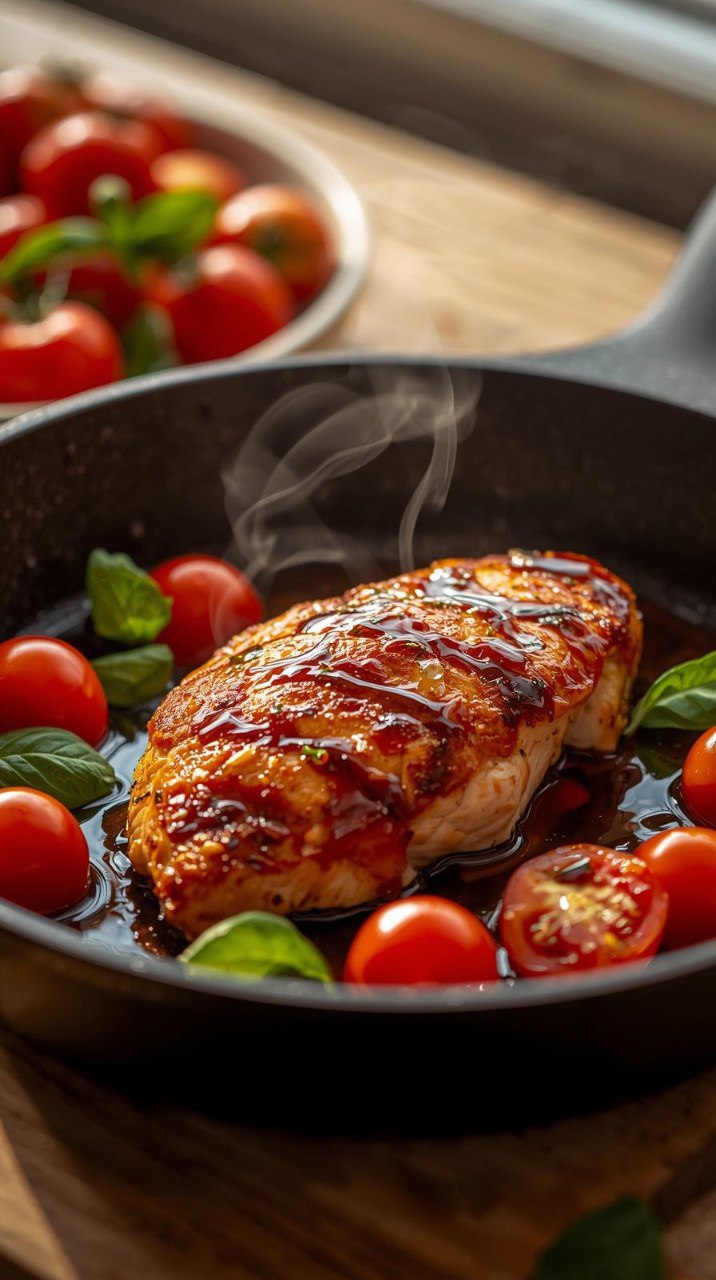
When I cook Caprese Chicken, I pay attention to sound first. The chicken should meet the pan with a steady, confident sizzle, not a sharp crackle and not silence. That tells me the temperature is right.
The first side cooks undisturbed. I watch the edges turn opaque and the surface firm slightly. When it releases from the pan without resistance, I turn it. The second side takes less time.
Tomatoes go in when the chicken is nearly there. I listen for the change in sound as their moisture hits the pan. The heat softens them just enough to release juice without collapsing completely.
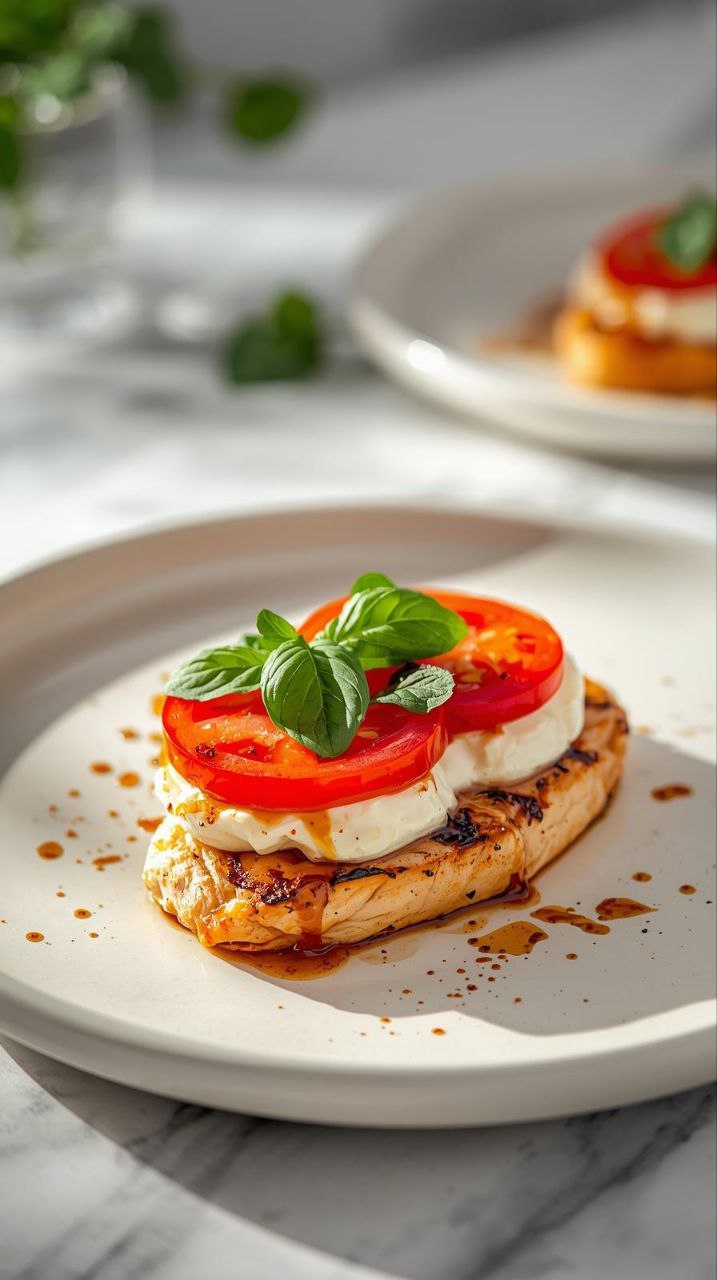
Mozzarella comes last. I lower the heat and let it melt slowly. It should soften and spread, not bubble aggressively. I take the pan off the heat before it looks finished. Residual warmth does the rest.
The basil goes on at the very end. I tear it with my hands and let the steam lift its aroma. The dish settles for a minute before serving. That pause matters.
Small Errors & Adjustments
I have made Caprese Chicken enough times to know where it can go slightly wrong.
I have cooked the chicken too hot, which tightens it before it has time to relax. Lower heat fixes that.
I have added the mozzarella too early, which turns it grainy and watery. Waiting until the very end solves this.
I have crowded the pan, especially when cooking more than two portions. The result is steaming instead of searing. I now cook in batches without hesitation.
None of these are serious mistakes, but they do change how the dish feels.
Variations
I vary Caprese Chicken based on season and energy rather than creativity.
In summer, I sometimes add an extra tomato and let it cook down slightly more, creating a light sauce.
In winter, I keep the tomatoes firmer and rely more on olive oil for richness.
On evenings when I want something heartier, I serve Caprese Chicken with warm bread or a small portion of pasta. On lighter days, I keep it alongside vegetables or salad.
I do not turn it into a baked dish unless I need to cook for several people at once. The stovetop version feels more controlled.
Storage & Leftovers
Caprese Chicken keeps for up to two days in the fridge. I store it in a shallow container so it cools quickly.
For reheating, I use low heat in a covered pan. Microwaving works, but the mozzarella firms up more than I like.
It does not freeze well. The texture of the cheese changes, and the tomatoes lose their shape. I only make what I expect to eat.
Leftovers are best used simply, without trying to refresh them into something new.
FAQ
Can I use chicken thighs instead?
Yes. They take slightly longer and benefit from gentler heat.
Is Caprese Chicken spicy?
No. It is mild and balanced.
Can I make this ahead of time?
It is better cooked and eaten the same day.
Does it need balsamic glaze?
No. I use it occasionally, but the dish stands without it.
What should I serve with it?
Something plain. Bread, rice, or vegetables work well.
Closing
I still make Caprese Chicken because it continues to do what I need it to do. It fits into my evenings without asking for attention. It respects the ingredients and the cook.
As a piece of simple home cooking, it remains steady and reliable. I know how it will behave, and it rarely surprises me. That is not a flaw.
Caprese Chicken has earned its place in my routine by being consistent. I trust it, and that is usually enough.
Caprese Chicken (Italian Recipe)
Prep time: 10 minutes
Cook time: 20 minutes
Servings: 2–3
Ingredients
- Boneless, skinless chicken breasts
- Ripe tomatoes
- Fresh mozzarella
- Fresh basil leaves
- Olive oil
- Salt
- Black pepper
Method
Heat olive oil in a wide pan over medium heat. Season the chicken lightly and cook until golden on both sides and just cooked through. Add tomatoes and allow them to soften slightly. Lower the heat, add mozzarella, and let it melt gently. Remove from heat, finish with basil, and rest briefly before serving.
This is Caprese Chicken as I actually cook it: steady, balanced, and part of everyday life.