Pecan Pie Cobbler (Easy Southern): 6 Effortless Fixes for Dull, Attention-Heavy Evenings
I usually make Pecan Pie Cobbler (Easy Southern) in the late afternoon when the light in the kitchen softens and the day feels steady. It is the kind of dish that appears without much thought, often alongside simple home cooking for a weekday evening or a quiet weekend meal. The recipe fits naturally into my routine because it combines elements that I usually keep on hand: nuts, brown sugar, and a basic batter. I do not consider it celebratory or extravagant; it exists to be dependable, a warm presence at the table without demanding attention.
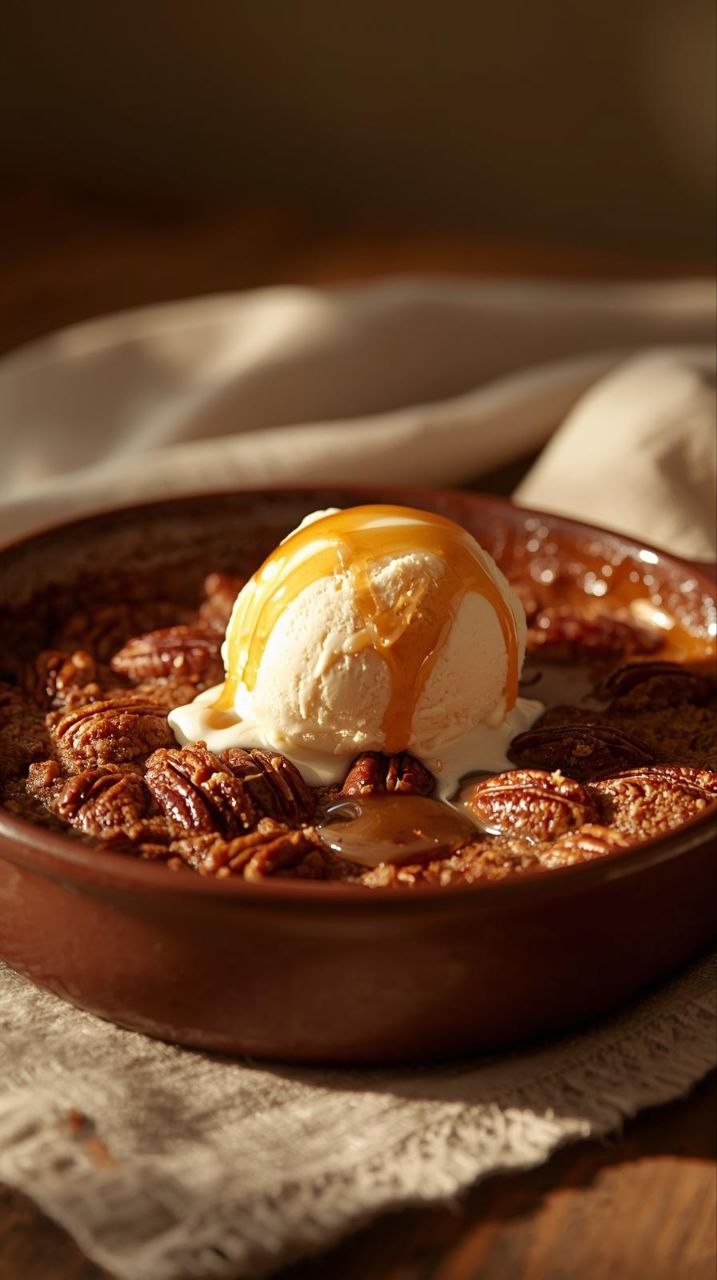
The dish sits in a modest baking dish, the pecans glinting slightly under a light syrup, the batter rising around them in a way that always seems consistent. It is the sort of sweet I prepare when I want something structured and predictable at the end of the day. I tend to serve it simply, sometimes with cream, sometimes without, letting it provide a quiet note to the household rhythm.
Why It Stays in Rotation
Pecan pie cobbler has settled into a regular place in my cooking because it behaves exactly as I expect it to. Its timing is consistent, and the components interact in ways that require minimal intervention. I can set it in the oven and attend to other tasks, confident it will emerge with the right texture and flavour.
The batter rises to the same height, the pecans remain lightly toasted, and the syrup pools predictably. The dish does not demand adjustments for oven inconsistencies or ingredient variability, which is part of its appeal. It is a reliable family dinner accompaniment or an easy evening meal dessert, depending on what else is on the table.
I tend to prepare it when I am thinking of something simple and steady. There is little decision-making involved: the ingredients are standard, the method straightforward, and the outcome consistent. In a household where evenings are often hurried, this pecan pie cobbler occupies a calm, dependable place.
Ingredient Behaviour Notes
- Pecans: Provide a firm texture, a mild bitterness against the sweet syrup, and a visual anchor in the dish. I no longer bother with toasting them separately; the oven heat is enough.
- Brown sugar: Forms a syrup with butter and butterfat in the batter. Its moisture content affects the density; a slightly lighter brown sugar makes the top a little less heavy.
- Butter: Adds richness and encourages a tender crumb. I note that the butter temperature affects the batter more than any single step in mixing.
- Eggs: Bind the batter and stabilise the syrup. I observe that older eggs sometimes give a firmer set; freshness alters the top crust minimally.
- Flour: Provides structure. I am flexible with plain or self-raising flour; the difference is minor in texture. I no longer add extra leavening beyond what is already in self-raising flour if used.
- Vanilla extract: Contributes aroma rather than structural effect. I am often indifferent to its exact measure now.
- Salt: Highlights the pecans and balances the sweetness. I tend to use fine salt and adjust minimally.
- Cream (optional for serving): Adds moisture and cools the sweetness. I keep it optional; it does not change the fundamental texture of the cobbler.
Cooking Behaviour Log
I have noticed that the dish responds predictably to oven temperature and timing. The batter begins as a pale mixture with visible pecans scattered on the surface. Within minutes, it thickens, and the top develops a light sheen.
The sound is subtle: a gentle bubbling from the edges and occasional soft crackling from the sugar syrup as it heats. The batter sets first along the sides, leaving the centre slightly softer until the final stages. The pecans darken slowly, taking on a toasted hue without requiring active monitoring.
Visual cues are more reliable than any timer. The top should look firm but not dry, and the syrup should be lightly bubbling. When the edges pull back slightly from the dish, I know the texture has settled as it should. Even when the batter varies in height from one batch to another, the surface and edge behaviour reliably indicate readiness.
Small Corrections Learned Over Time
- I once noted that a slightly lower oven temperature preserves a more uniform top without over-browning the edges.
- Resting the cobbler for a short period after baking allows the syrup to integrate with the batter, preventing a runny centre.
- I no longer stir the syrup or batter mid-bake; the dish behaves consistently without intervention.
These small observations have refined the routine without introducing any complexity. Each batch now requires little attention beyond setting the oven and noting the visual cues.
Acceptable Variations
- Seasonal pecans: I adjust the amount slightly depending on how large or fresh the nuts are in store.
- Sugar types: Occasional use of light muscovado alters colour subtly but does not affect reliability.
- Energy level: On evenings when I prefer minimal preparation, I may skip additional flavourings like a touch of bourbon; the cobbler remains satisfactory.
I avoid experimental variations or substitutions that would compromise texture or predictability. The dish remains consistent across slight changes in ingredient source or preparation energy.
Storage and Leftover Notes
Pecan pie cobbler keeps reasonably well at room temperature for a day. Refrigeration extends this by a day or two but slightly firms the batter and syrup. Reheating gently in the oven or under a warm grill restores a portion of the original texture.
I have observed that the top crust becomes slightly softer after refrigeration. The pecans retain their integrity, though they lose a minor degree of crunch. Overall, leftovers maintain flavour and moisture if stored with minimal exposure to air.
Common Questions
- Can I make it ahead? Yes. It keeps for a day at room temperature or two in the fridge.
- Does it freeze well? I have not found freezing necessary; the syrup alters texture when thawed.
- Do the pecans need to be toasted first? No, the baking process is sufficient.
- Is it overly sweet? It is moderately sweet, balanced by the butter and pecans.
- Can I use a different nut? I have tried walnuts; results are acceptable but slightly softer in texture.
- Do I need a special dish? Any modestly sized ovenproof dish works; depth affects syrup pooling slightly.
Closing Log Entry
Pecan pie cobbler remains unchanged in my rotation because it performs consistently and requires minimal attention. It fits neatly into the rhythm of weekday evenings and simple home cooking, providing a quiet reliability that is rare among desserts.
I do not modify the basic proportions or timing, confident in the predictable outcome. It serves as a stable presence, an easy evening meal companion or a reliable family dinner sweet. The dish’s consistency allows it to settle naturally into routine, without fanfare or fuss, appearing as a calm note at the table.
Even as other recipes are cycled through the household, this cobbler holds a quiet, dependable place. Its texture, flavour, and behaviour remain steady across seasons and batches, and it continues to be a dish that is set in the rhythm of everyday life rather than a performance or statement.
Recipe Card
Pecan Pie Cobbler (Easy Southern)
Prep time: 15 minutes
Cook time: 45 minutes
Servings: 6–8
Ingredients:
- 120g unsalted butter, melted
- 150g brown sugar
- 2 large eggs
- 100g plain or self-raising flour
- 1 tsp vanilla extract
- ½ tsp fine salt
- 150g pecans, halved
- Optional: cream for serving
Method:
- Preheat the oven moderately.
- Mix melted butter with brown sugar until smooth.
- Beat in eggs and vanilla extract.
- Fold in flour and salt until just combined.
- Pour batter into a lightly greased baking dish.
- Scatter pecans evenly over the top.
- Bake until the top is firm and edges are pulling slightly from the dish.
- Rest briefly before serving. Serve with cream if desired.