German Soft Pretzel Sticks: 2 Effortless Fixes for Rushed, Attention-Heavy Evenings
Quiet Opening
I usually make German soft pretzel sticks on an evening when I have a little more time for the kitchen, often when the week’s rhythm is settled and the pace is slower. They fit naturally into the day because the dough itself is straightforward, and I can leave it to rest without having to watch it constantly. The shaping of the sticks is quiet work, the kind that can be done while other parts of the kitchen continue on their own rhythm.
This recipe appears in my routine as a simple evening meal or sometimes as a reliable snack for later in the week. The dough responds predictably, and the boiling step, brief as it is, gives the pretzels their characteristic skin without demanding much attention. I keep the ingredients basic, and the process, once familiar, requires little conscious decision-making.
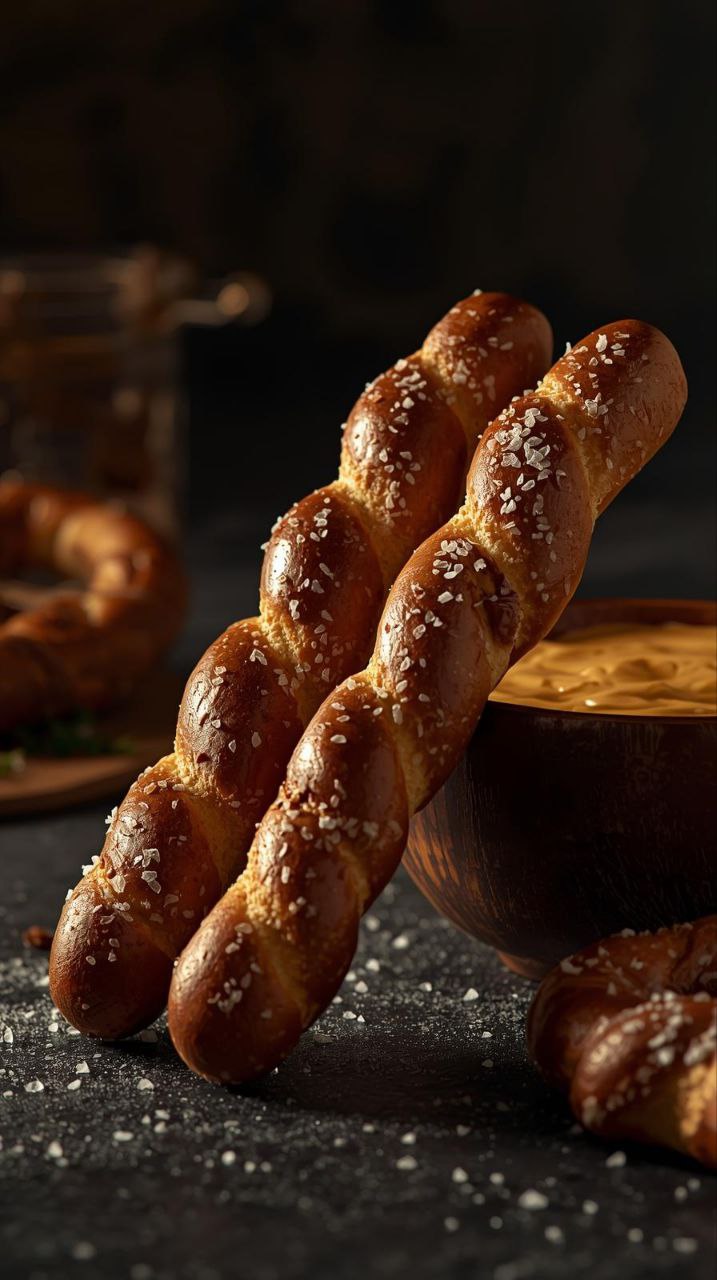
I tend not to pair them with anything unusual. Usually, a small pot of mustard or a smear of butter is enough. The pretzel sticks themselves are the main point of interest, and their soft, pillowy texture contrasts quietly with the salt-dusted surface.
Why It Stays in Rotation
German soft pretzel sticks have remained part of my kitchen rhythm because they are consistent in their behaviour. The dough rises reliably without precise monitoring, and the texture of the finished pretzels is predictable: soft inside, lightly chewy on the outside. Timing rarely surprises me. The boiling step is brief and gives a dependable sheen and bite that doesn’t vary much from one batch to the next.
I can measure out portions of dough and shape them while other elements of the evening are underway. The sticks bake evenly in a standard oven, and I seldom notice one being underdone or overly browned when the oven has settled at the correct temperature. They come out almost identically whether it’s a weeknight or the weekend.
The recipe is low-maintenance. I don’t have to worry about complicated folding or rolling techniques, and the ingredients behave in predictable ways. The surface salt is easy to adjust for taste or texture, and I can change the number of sticks without affecting the rise or crumb. The pretzel sticks occupy a quiet corner of the kitchen’s rotation, appearing when a simple home-cooked item is required without drawing attention to themselves.
Over time, I’ve observed that the dough tolerates minor variations in temperature or flour type. Even if I am slightly later than usual in shaping, the pretzel sticks still finish with the texture I expect. The process doesn’t demand perfect conditions, which is one reason they remain a reliable family dinner or easy evening meal choice.
Ingredient Behaviour Notes
- Flour – I usually use strong white bread flour. It contributes structure and chew without being heavy. I notice that a higher protein content gives a slightly firmer bite, while a lower protein flour produces a softer interior. I no longer bother weighing it obsessively; approximate cups or grams work because the dough is forgiving.
- Yeast – Active dry yeast behaves predictably. I tend to dissolve it in warm water, though I have tried sprinkling it directly into flour. Both approaches give a reliable rise, though dissolving first feels slightly faster. Fresh yeast is something I rarely use now; it doesn’t noticeably improve the end texture for my usual batches.
- Sugar – A small amount of sugar encourages the yeast and gives a subtle golden hue to the baked surface. I’m flexible with the quantity, as small variations don’t change the flavour in a noticeable way. I used to be more precise, but it has proven unnecessary.
- Salt – Essential for flavour in the dough and on the finished surface. I pay attention to the salt sprinkled on top; it creates a contrast to the soft interior. The type of salt affects texture. Coarse pretzel or kosher salt holds and gives a mild crunch, whereas finer salts can dissolve quickly and reduce the visual contrast.
- Butter – Occasionally added to the dough for richness. I find it slightly improves flavour, but I often omit it without compromising the structure. It seems more important when the dough has been sitting longer than usual.
- Water – Temperature matters more than I initially thought. Tepid water encourages a steady rise, while water that is too hot can slow the process or affect texture. I no longer overthink the exact degree; just avoiding extremes is sufficient.
- Baking soda bath – This is what gives the characteristic pretzel skin. I have noticed that the concentration affects browning and the outer chewiness. I rarely change the amount now, as the ratio I use consistently gives a thin, crisp skin without hardening the interior.
- Optional toppings – Seeds or coarse salts. I use them selectively, usually when I want a slight textural difference. They do not affect the core structure. I no longer bother with glazes or sweet coatings unless specifically desired.
- Flexibility – I sometimes substitute a portion of white flour with whole wheat or spelt. The dough rises more slowly, and the crumb is slightly denser, but the sticks bake well and retain the same surface characteristics.
- Omissions – I have stopped adding extra milk, honey, or flavourings. They complicate the dough without producing a noticeably better stick for everyday meals. The basic combination of flour, yeast, water, sugar, and salt suffices.
Cooking Behaviour Log
The dough begins quietly, pliable and soft under my hands, slightly tacky but easy to shape after a brief rest. It responds to warmth predictably, rising at a steady pace without sudden surges. I notice the surface becomes slightly domed and smooth before I consider it ready to shape.
When I shape the sticks, the dough feels elastic, stretching slightly but returning gently when released. It is easy to roll evenly, and the sticks maintain their form without springing back too much. The air pockets inside are small and uniform, contributing to a consistent chew once baked.
The boiling stage has a distinct rhythm. As each stick hits the water, a faint hiss rises, and the surface begins to puff slightly. The colour remains pale, but the dough firms immediately to the touch. I usually observe a gentle swelling along the edges, which signals the stick is responding correctly to the alkaline bath. The surface becomes smooth and slightly shiny, the texture shifting subtly as the water evaporates from the exterior.
Once the sticks reach the oven, they change gradually. I note the first signs of browning at the edges, followed by a deeper hue across the top. The smell is quiet, malty, almost neutral, without strong sweetness or spice. The surface hardens lightly, while the interior retains a soft, springy texture. The crust develops small fissures along the top, which I have learned to expect; they indicate proper expansion and moisture retention inside.
The overall timing feels consistent. The sticks move from soft dough to boiled, then to baked with minimal variation. Visual cues—the sheen from the baking soda bath, the slight deepening of colour, the gentle firming of the crust—signal readiness more reliably than any clock. I rarely need to lift a stick or press it to judge doneness; the appearance is sufficient.
Even sound contributes to my observation. A faint crackling as the surface firms is normal, though it is subtle. There is no dramatic snap, only the gentle settling of moisture and crust. The process is quiet, each stage unfolding in predictable, calm intervals.
Small Corrections Learned Over Time
I have made only a few minor adjustments to my approach over repeated batches, each one the result of observing the dough and the sticks rather than attempting to change the recipe fundamentally.
- Slightly lower oven heat – I noticed that when the oven was a touch too high, the crust developed too quickly, leaving the interior slightly less soft than I prefer. Reducing the temperature by a small margin allows the exterior to brown evenly while keeping the interior tender.
- Resting after boiling – I found that letting the sticks rest on the baking tray for a few minutes before placing them in the oven improves consistency. It gives the surface time to dry lightly and firm just enough to resist collapse, producing a more uniform shape.
- Monitoring moisture on the surface – Occasionally, the baking soda bath leaves tiny droplets on the dough. I learned to gently pat these away before baking. If left, they can create small uneven spots on the crust. This adjustment is subtle, but over time it results in sticks with a smoother, more even exterior.
These are not corrections in the sense of fixing failures, but refinements that make the behaviour of the dough and finished pretzels slightly more predictable. Each batch reinforces what I have learned, and I rarely need to adjust anything else. The recipe itself is stable and forgiving, which is why it continues to fit quietly into routine.
Acceptable Variations
I keep variations minimal and only adjust them according to season, ingredient availability, or the energy level I have in the kitchen. The core character of the German soft pretzel sticks remains unchanged.
- Flour substitution – In autumn or winter, I sometimes use part whole wheat or spelt flour. The sticks are slightly denser, the crumb a touch more textured, but the rise and surface behaviour are consistent. I rarely exceed one-third substitution; beyond that, the chew shifts noticeably.
- Toppings – Coarse salt is standard, but occasionally I use sesame or poppy seeds. The seeds do not alter the texture of the dough; they only add a small variation in mouthfeel and visual contrast.
- Butter in dough – During colder months, I sometimes add a small amount of melted butter to the dough. It softens the crumb slightly and enriches the flavour, but the basic texture and shape remain predictable.
- Timing flexibility – On evenings when I am less attentive, I allow the dough a slightly longer rise. The pretzel sticks tolerate this without compromising structure. They may develop slightly more air pockets inside, but the exterior remains crisp and even.
- Boiling bath variations – If I have only baking soda solution at a slightly lower concentration, I still proceed. The sticks brown a little differently and the crust may be marginally less crisp, but the final product is still recognisably the same.
These variations do not change the core rhythm of preparing the pretzel sticks. They are minor adjustments made quietly, with the understanding that the recipe is resilient and accommodates small differences without losing its fundamental characteristics.
Storage and Leftover Notes
The German soft pretzel sticks keep reasonably well for a few days when stored at room temperature in a sealed container. The exterior remains mostly crisp for the first day, while the interior retains its soft, springy texture. By the second day, the crust begins to soften slightly, and the chew inside becomes more uniform.
Reheating restores some of the original texture. A brief time in a moderately warm oven brings back a slight firmness to the surface, though the contrast between crust and crumb is never quite as pronounced as when freshly baked. I rarely use a microwave; it softens the sticks evenly but eliminates the faint chew I value in the skin.
If left unwrapped, the sticks lose moisture unevenly, and the crust can become slightly leathery. I have found that small adjustments in storage—such as loosely covering with parchment or keeping them in a paper-lined container inside a box—help maintain the balance between softness and surface firmness.
Freezing works adequately for longer storage. I wrap the sticks individually or in pairs and store them in a freezer bag. When thawed at room temperature and briefly reheated, they recover their characteristic texture, though the top may be less glossy. I consider this a practical solution for keeping the sticks available for several weeks, especially when planning ahead for simple home cooking or a reliable family dinner.
The dough and final texture do not degrade quickly. The most noticeable change is the exterior becoming less crisp and the surface salt slightly dispersing. The interior retains its structure longer than I initially expected, which reinforces why these pretzel sticks continue to occupy a quiet place in the weekly rotation.
Common Questions
Do the pretzel sticks need to be boiled?
Yes. The brief boil in a baking soda solution gives the characteristic crust. Skipping this step results in a softer surface and a less distinct texture.
Can I make them ahead of time?
The dough can be prepared in advance and left to rise slowly in the fridge. It develops a slightly deeper flavour, and the sticks bake consistently when needed.
What if I don’t have coarse salt?
Fine salt can be used, though the visual contrast and surface crunch are reduced. I usually reserve coarse salt for the exterior.
Will they keep overnight?
Yes, at room temperature in a sealed container. The crust softens slightly, but the interior remains tender. Reheating in a warm oven restores some surface firmness.
Can I freeze them?
I do so occasionally. I wrap sticks individually or in pairs and store them in a freezer bag. Thawed sticks retain their texture reasonably well after a brief oven warm-up.
Is butter necessary in the dough?
No. It can add richness, but I often omit it without affecting the chew or structure. The dough behaves consistently either way.
Closing Log Entry
German soft pretzel sticks remain a consistent part of my kitchen because they behave predictably at every stage. The dough rises reliably, the boiling bath produces the familiar sheen and chew, and the baking process yields a soft interior with a lightly crisp surface. I do not need to monitor every detail closely, and the outcome rarely deviates from expectation.
I have not altered the recipe over time, aside from minor refinements to temperature, resting, and surface moisture. These small adjustments improve consistency without changing the fundamental character of the sticks. The recipe continues to occupy a quiet corner of the week, appearing when a simple home-cooked item or reliable family dinner is required.
The pretzel sticks integrate naturally into routine. They fit evenings with minimal planning and moderate attention, and their texture and flavour are stable across batches. I can prepare them with a steady rhythm, confident that the dough, the boiling step, and the oven will each respond as documented over time. The recipe remains unchanged because it is dependable, forgiving, and uncomplicated, qualities that make it quietly suitable for repeated use in everyday cooking.
Recipe Card: German Soft Pretzel Sticks
Prep time: 20–25 minutes (plus resting time)
Cook time: 15–20 minutes
Servings: 8–10 sticks
Ingredients:
- 500 g strong white bread flour
- 7 g active dry yeast
- 10 g sugar
- 10 g salt
- 300 ml lukewarm water
- 15 g melted butter (optional)
- 2 L water (for boiling)
- 30 g baking soda (for boiling)
- Coarse salt for sprinkling
Method:
- Combine flour, yeast, sugar, and salt in a bowl. Add water (and butter if using) and mix until a soft dough forms.
- Knead until smooth and elastic. Cover and leave to rise until roughly doubled.
- Divide dough into equal portions and shape into sticks.
- Bring water and baking soda to a gentle boil. Briefly dip each stick, then remove and place on a baking tray.
- Sprinkle coarse salt on top.
- Bake in a preheated oven until golden brown and lightly crisp.
- Cool briefly before serving.