Sticky Pecan Focaccia Bread: 8 Effortless Fixes for Dull, Attention-Heavy Evenings
Quiet Opening
I often make sticky pecan focaccia bread in the early evenings, usually on days when the rhythm of the kitchen is calm and there is time for a slow bake. It tends to appear alongside simple home cooking, forming part of a weeknight routine when I want something that fills the space without requiring constant attention. It is not a dish I prepare for special occasions, but it fits naturally into the day when a warm, slightly sweet bread is needed for dinner or a late snack. Its texture and aroma make it quietly reassuring; it arrives without fuss and occupies the table without commanding it.
This focaccia is one of those dishes that feels steady in my rotation. It doesn’t demand adjustments every time and behaves predictably in the oven. I keep it around because it occupies a niche: a bread that is a little sweet, a little sticky, with the crunch of pecans punctuating the soft crumb. It pairs well with a simple evening meal, alongside roasted vegetables or a lightly dressed salad. I usually notice that it brings a subtle richness to the table without overshadowing anything else. Its presence is understated but reliable.
Why It Stays in Rotation
Sticky pecan focaccia bread remains on my list for several practical reasons. The first is reliability. I can mix the dough, leave it to prove, and expect the same texture and flavour each time. The sugar and butter in the topping caramelise in a consistent manner, producing a glossy, slightly sticky finish without burning or crystallising unexpectedly. The pecans add a textural contrast that rarely fails to retain their crunch during baking.
The timing is consistent as well. I have observed over multiple bakes that this bread behaves in a predictable window of proofing and baking. It does not require last-minute interventions. I can start it while preparing other parts of the evening meal, and it will reach readiness when dinner is nearly served. There is minimal decision-making involved. Once the dough is mixed and in the pan, it behaves according to habit. I do not monitor it obsessively, because I have learned the approximate rhythm of its expansion, browning, and caramelisation.
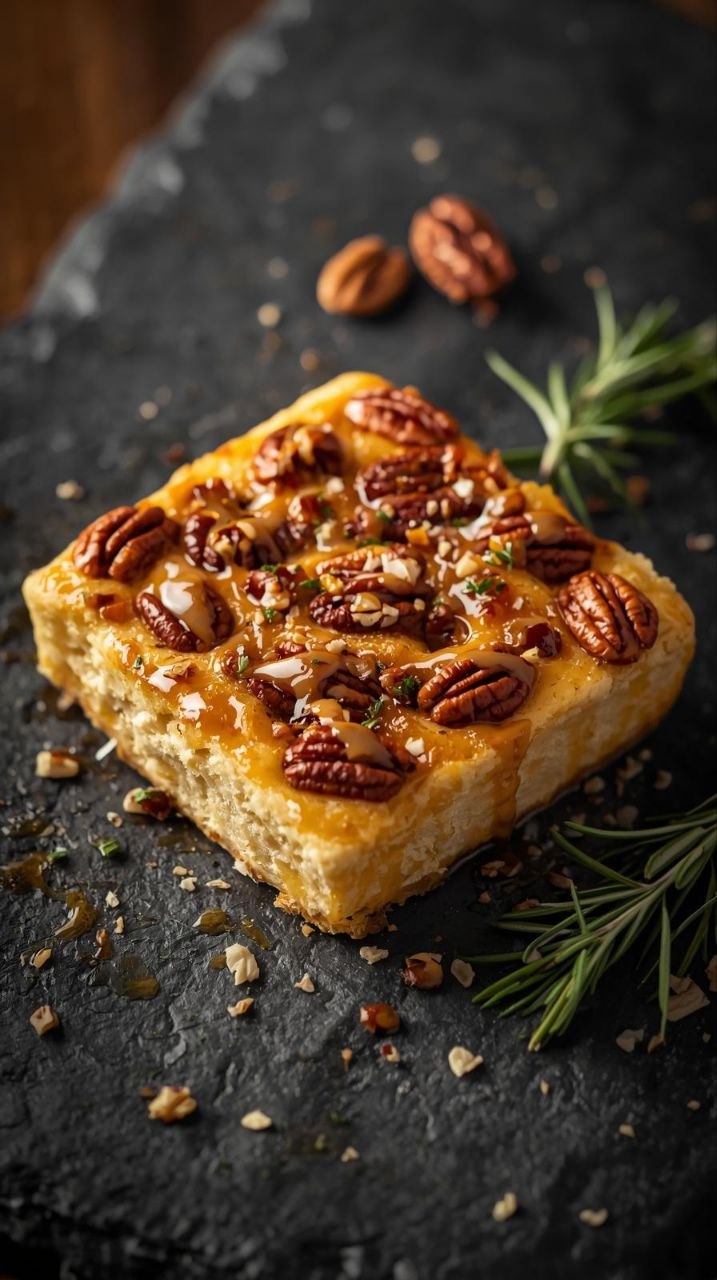
The results are consistent. The crumb is soft but structured, not collapsing under its own weight, and the sticky topping settles into a thin, glossy layer that clings to the surface without making it soggy. The pecans do not float or sink excessively, and the sweetness remains balanced. Each time I prepare it, the same textures and flavours emerge, which reinforces its place in the weekly rotation. It is quietly dependable, a bread that I know will meet expectations without any improvisation or adjustment.
Ingredient Behaviour Notes
- Strong white bread flour: Provides a consistent structure. I have tried half-and-half with plain flour, but the crumb is noticeably less resilient. I now rarely deviate.
- Butter in the topping: Adds richness and assists in caramelisation. Quantity matters more than the brand; slight differences in butter flavour are secondary.
- Brown sugar: Contributes to stickiness and subtle molasses notes. The proportion controls how much the topping adheres versus pooling at the edges.
- Pecans: Maintain crunch even after baking. I often toast them lightly before adding to bring out flavour. Placement affects even distribution; a casual scatter is sufficient.
- Yeast: Always active dry. Fresh yeast performs similarly, but I have not found it worth changing in routine baking.
- Milk: Hydrates the dough and adds a soft texture. The temperature affects proofing slightly, but I have flexibility between room temperature and gently warmed.
- Salt: More than expected is not necessary; it brings balance to sweetness but does not dominate flavour.
- Optional spices (cinnamon or nutmeg): Occasionally included when I want a slight seasonal note. I no longer bother most weeks, as the pecans and sugar are sufficient.
- Egg wash: I sometimes skip it; the glossy topping remains appealing due to the sugar and butter interaction.
Cooking Behaviour Log
I notice that the dough expands predictably during proofing, forming a soft, elastic surface with visible bubbles underneath. It is responsive to gentle pressing; slight indentation remains but slowly fills back in. The sound of the oven is not markedly different from other breads, but the first signs of caramelisation on the pecans occur before the crust browns fully.
Visual cues are important. The topping becomes glossy and slightly bubbling, signalling that it has melted sufficiently to coat the surface. The edges darken evenly, without streaking. The crumb inside remains soft, with small, even holes that reflect consistent fermentation. The pecans maintain their shape, browning slightly at the tips.
Temperature affects the crust subtly. Slightly higher heat accelerates browning, sometimes before the topping has fully set. Lower temperatures allow a more even caramelisation, though it lengthens baking time slightly. I usually observe the balance between a lightly golden crust and fully sticky surface, adjusting the rack position as necessary.
Timing is consistent across multiple attempts. I note the window when the dough is ready for the pan, the period of topping melting, and the moment the crust reaches the preferred shade of brown. These intervals are now intuitive, developed from repeated observation rather than measurement.
Small Corrections Learned Over Time
- The topping can become too dark if the oven is slightly hotter than usual. I now monitor the edges more closely and slide the pan a little lower to slow the upper browning.
- The crumb sometimes compresses if removed immediately from the pan. I have found a brief rest on a cooling rack preserves structure and allows the sticky topping to stabilise.
- Proofing can be slightly variable. If left longer than usual, the dough spreads more, producing a thinner focaccia. I accommodate this by adjusting pan size rather than altering ingredients.
Acceptable Variations
- Seasonal: In autumn, I sometimes add a few dried figs or a light sprinkle of cinnamon to the topping. It behaves similarly to the standard version.
- Availability: If pecans are unavailable, walnuts work acceptably, though the texture is slightly softer.
- Energy level: On evenings when attention is minimal, I allow a slower, cooler proof and slightly extend baking time. The bread remains reliable without intervention.
I do not include extreme substitutions such as different flours, oils, or sugars; these consistently produce less predictable results. The variations are quiet and practical.
Storage and Leftover Notes
Sticky pecan focaccia bread keeps well at room temperature for a day or two, covered loosely to prevent drying. The topping retains its stickiness, though the surface becomes slightly firmer over time. Refrigeration is possible, but the crumb dries more quickly and the pecans soften slightly. Reheating briefly in a low oven restores warmth and a degree of stickiness, though the topping is less fluid than freshly baked.
Freezing is acceptable. I slice before freezing to allow easier portioning. When thawed, the bread regains most of its texture, though the topping becomes less glossy. The subtle nutty aroma remains intact. I have observed that prolonged storage, particularly beyond three days at room temperature, results in a firmer crumb and slightly muted sweetness.
Common Questions
Does the bread need a second rise?
I usually do a single rise; the texture is sufficient without prolonging proofing.
Can I skip the pecans?
Yes. The focaccia is slightly less textured but otherwise behaves the same.
Is it necessary to toast the nuts?
Not strictly, though it adds a subtle depth of flavour.
Can it be made ahead of time?
Yes. The dough can be prepared and refrigerated briefly before baking.
Does it keep well in the fridge?
It does, though the crumb dries and the topping loses some gloss.
Can I use a different sugar?
Light brown sugar is standard. White sugar is acceptable but produces less stickiness.
Closing Log Entry
Sticky pecan focaccia bread remains largely unchanged in my routine because it performs consistently and integrates seamlessly into the rhythm of the day. Its texture and topping behave predictably, the ingredients remain familiar, and the visual cues are reliable. I continue to include it because it requires minimal attention, produces a steady result, and complements other simple home cooking without distraction. The bread is quietly dependable, appearing as a consistent presence at the table and fitting naturally into the flow of weeknight meals and calm evenings.
It does not require reinvention. It does not demand trends or attention. Its persistence is earned through repeated observation and the confidence that comes with a bread that behaves exactly as expected. It occupies its place quietly, fulfilling its function and disappearing from the pan at a predictable pace. Its presence is steady, unobtrusive, and entirely reliable.
Recipe Card: Sticky Pecan Focaccia Bread
Prep time: 20–25 minutes
Cook time: 25–30 minutes
Servings: 8–10
Ingredients
For the dough
- 400 g strong white bread flour
- 7 g dried yeast
- 50 g caster sugar
- 1 tsp salt
- 240 ml warm milk
- 50 g unsalted butter, melted
For the topping
- 50 g unsalted butter, melted
- 75 g soft brown sugar
- 100 g pecans, halved or roughly chopped
- Optional: ¼ tsp cinnamon or nutmeg
Method
- Combine flour, yeast, sugar, and salt in a large bowl. Add milk and melted butter. Mix until a soft dough forms.
- Knead briefly until elastic. Cover and leave to prove until doubled.
- Prepare a baking tray with parchment or a light coating of butter. Transfer the dough and flatten slightly.
- Mix melted butter and brown sugar. Spread evenly over the dough. Scatter pecans on top.
- Optional: sprinkle with cinnamon or nutmeg.
- Leave the topped dough to rise briefly. Preheat oven to moderate temperature.
- Bake until the topping is glossy, bubbling, and lightly browned, and the bread is cooked through.
- Remove from oven and allow to cool slightly on a wire rack before slicing.